What does a TV mounting visit from SD Assembly Pros cover in San Diego?
A TV mounting visit from SD Assembly Pros covers the mount, the wall anchors, the cable run and the device hookup in one trip. Owner Stephan Lawrence runs the company under California contractor licence CSLB #833940, and the same visit can include soundbar mounting, surround sound and streaming device setup anywhere in San Diego County.
Which wall types can a TV be mounted on?
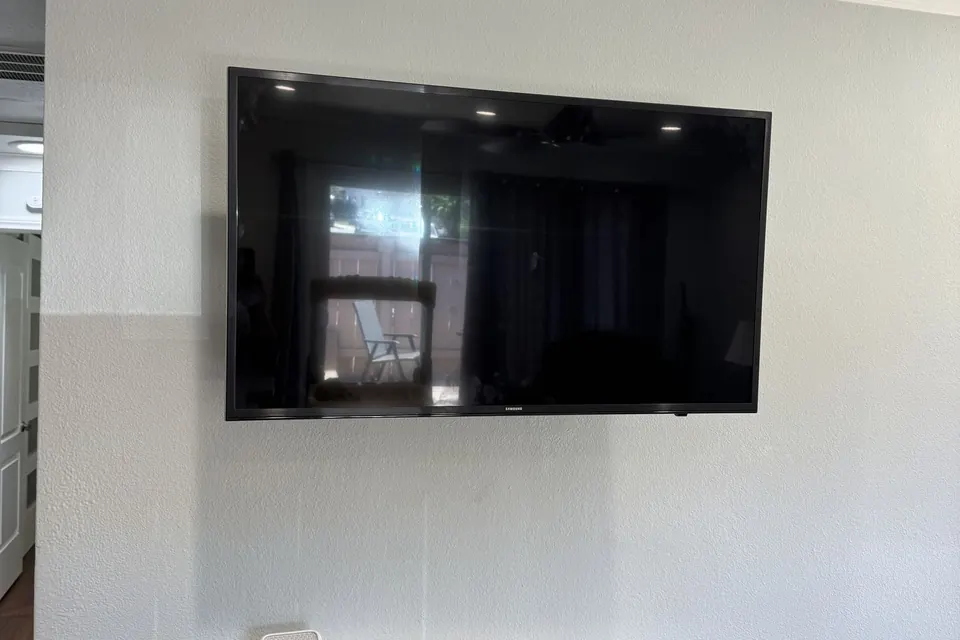
A TV can be mounted on drywall over wood studs, brick, concrete and stone, and SD Assembly Pros works on all four. Each wall takes a different fastener, so the wall decides how the job is done: lag bolts into studs on framed walls, expansion or screw anchors in masonry. The table shows what is checked first.
| Wall type | Fastener used | What to check first |
|---|---|---|
| Drywall on wood studs | Lag bolts through the mount plate into two studs | Stud positions and any wiring or pipes in the stud bay |
| Brick | Sleeve anchors or masonry screws set in sound brick | Whether the brick is structural or a thin veneer, the state of the mortar, and heat if it is a fireplace |
| Concrete, poured or block | Wedge anchors or concrete screws, drilled with a hammer drill | Solid wall or hollow block cores, and in a condo the association's rules on drilling into structural walls |
| Stone or stone veneer | Masonry anchors long enough to reach the solid backing behind the stone | Veneer thickness, an uneven face that needs spacers so the plate sits flat, and stone that may crack near an edge |
Two more wall types exist in San Diego housing. Some older houses, in neighborhoods such as North Park, Kensington and Mission Hills, have plaster over wood lath, where an electronic stud finder reads poorly and the stud is confirmed with a small pilot hole. Some condo buildings are framed with steel studs, which need toggle-style anchors rated for the weight of the TV instead of lag bolts. If you know which wall you have, say so on the booking form.
Should you choose a fixed, tilt or full-motion TV mount?
A fixed TV mount suits a screen at eye level facing the sofa, and a full-motion mount suits corners and rooms with two viewing spots. SD Assembly Pros installs fixed and full-motion mounts. A tilt mount sits between the two and helps when the screen has to go above eye level, for example over a mantel.
| Mount type | Suits | Trade-off |
|---|---|---|
| Fixed | A screen at seated eye level that is watched straight on | Sits closest to the wall, so the ports are hard to reach once the TV is hung and glare cannot be adjusted |
| Tilt | A screen above eye level, such as over a fireplace or in a bedroom | Angles down only; there is no side-to-side movement |
| Full-motion | Corners, open-plan rooms and a kitchen TV that is also watched from the living room | The extended arm levers on the wall, so anchoring matters more; it also sits further out and needs slack in the cables |
Whatever the type, the mount has to match the TV's VESA pattern, which is the spacing in millimetres of the four threaded holes on the back, and its weight rating has to exceed the weight of the TV. Both figures are in the TV manual. Height is the other decision: the guide to how high to mount a TV explains the eye-level rule, and the notes on mounting a TV above a fireplace cover heat and neck angle before you commit to the mantel.
How are the cables hidden after the TV is mounted?
Cables are hidden either inside the wall or in a paintable surface raceway, and SD Assembly Pros does both as part of cable concealment. Low-voltage cables such as HDMI can run through a framed wall when they carry an in-wall rating. The TV's own power cord cannot, so it needs a raceway or a rated in-wall power kit.
Masonry has no cavity, so on brick, concrete and stone the cables go in a raceway or drop behind a console. In a framed wall, fire blocking (a horizontal piece of lumber between two studs) can stop an in-wall run partway down, and it is located before the drywall is cut. Moving or adding an outlet behind the TV is electrical work. Mention it when you book so it can be scoped before the visit.
What should you have ready before the TV installer arrives?
Before the TV installer arrives, have the TV, the mount if you own one, and every cable and device at the house. SD Assembly Pros asks for brand names and model numbers on the booking form, so the screen size, mount and wall type can be matched to the right anchors before the visit.
- Send the details Give the TV brand, model number, wall type and a photo of the wall, and choose a time window: 8 to 10, 10 to 12, 12 to 3 or 3 to 5.
- Agree the position The height and centre line are marked on the wall and confirmed with you from your usual seat before any drilling.
- Find the structure Studs or sound masonry are located, and the area is checked for wiring and pipes.
- Fasten and level the mount The plate is anchored and levelled, the TV is hung, and its locking screws are set.
- Route the cables Cables go in the wall or in a raceway, with enough slack for a full-motion arm to extend.
- Connect and test The soundbar, speakers and streaming device are connected, and picture and sound are checked with you.
Can SD Assembly Pros mount a soundbar and set up surround sound?
Yes, SD Assembly Pros mounts soundbars and sets up surround sound and streaming devices on the same visit as the TV mounting. A soundbar goes on its own wall bracket or on a bracket that hangs from the TV mount, so it moves with a full-motion arm. An HDMI ARC or optical cable carries the audio from the TV.
Surround sound speakers
In a 5.1 layout the centre speaker sits directly under or over the screen, the left and right speakers flank it, the two surrounds go beside or slightly behind the seating, and the subwoofer stands on the floor near the front wall. Speaker wire runs follow the same in-wall or raceway choice as the TV cables. The soundbar setup guide covers placement and the TV audio settings that have to change.
Streaming device setup
Apple TV, Roku, Fire TV and Chromecast devices are connected, joined to your Wi-Fi and signed in, so have the Wi-Fi password and your account logins to hand. The booking form also lists projector and screen installs, game console setup and antenna installation. Describe those in the project details so the scope can be confirmed before a time is set.
What else can be booked with a TV mounting visit?
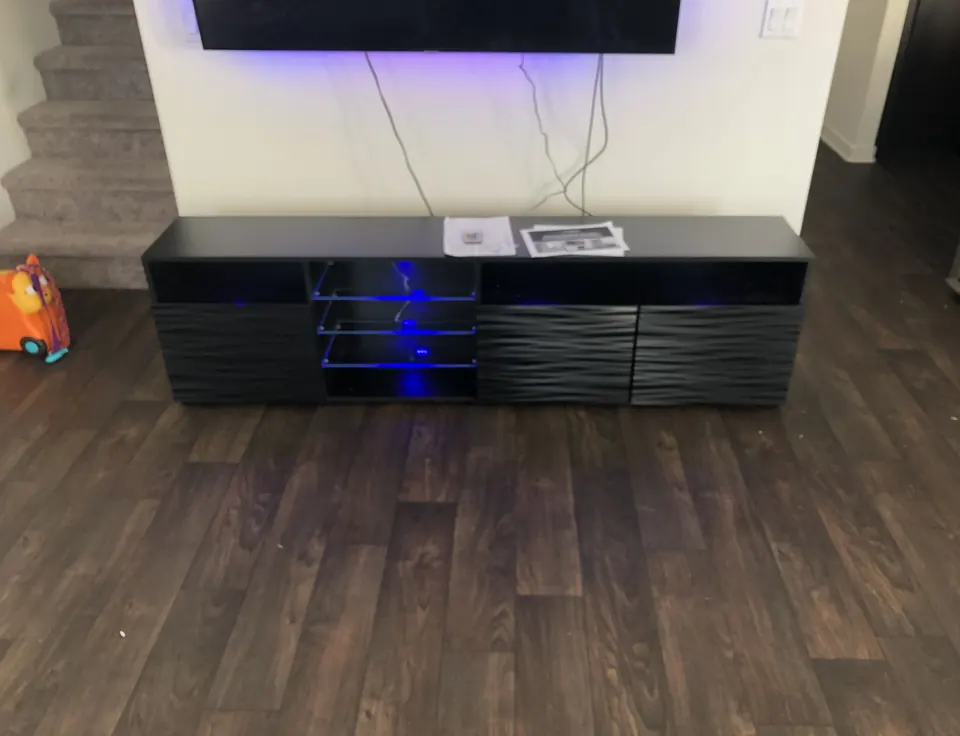
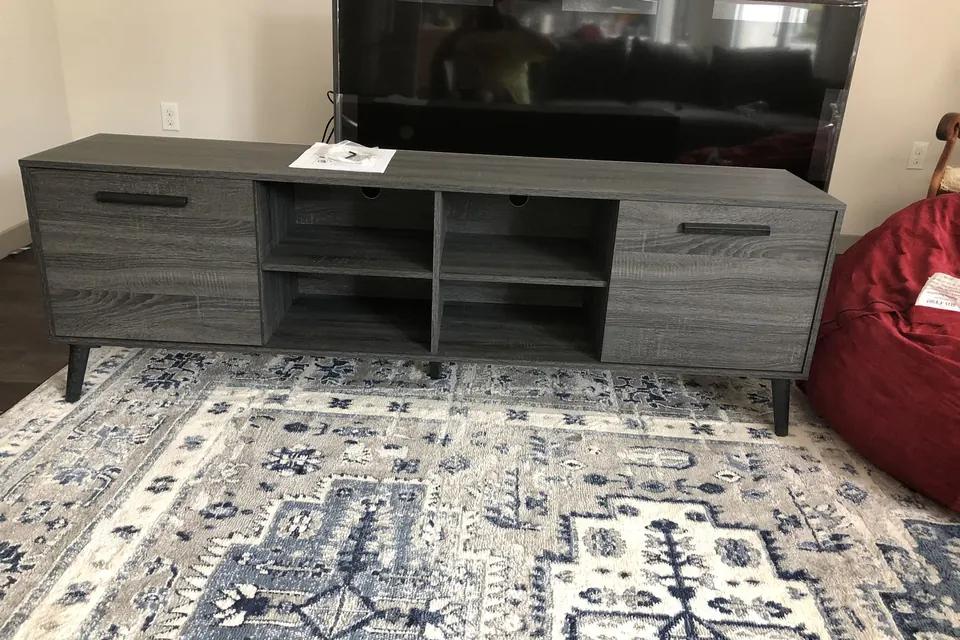
A TV mounting visit can be combined with the furniture and shelving that go around the screen. SD Assembly Pros builds the media console under furniture assembly, including IKEA BESTA units, and fits the shelf for the cable box under shelf mounting and picture hanging, so one booking covers the whole wall.
SD Assembly Pros also works with Wayfair Home Assembly and HandyBuddy. Orders placed through those services are carried out by the same San Diego technicians who take direct bookings. For a longer walk-through of wall types, heights and cable options, read the San Diego TV mounting guide.
TV mounting is available in all 26 San Diego County communities SD Assembly Pros serves, from Oceanside to Imperial Beach. The full list of assembly, mounting and handyman services shows what else can share the visit.
TV Mounting FAQ
SD Assembly Pros prices TV mounting from the details of the job, not from a flat rate. Screen size, wall type, mount type, in-wall or raceway cable concealment and any soundbar or speakers all change the work involved. Send the brand, the model number and a photo of the wall, and a quote comes back with available times.
Yes, a TV can go above a fireplace when the wall stays cool enough and the viewing height is comfortable. Check the TV manual for its maximum operating temperature, then feel the wall above the mantel with the fire running. Brick and stone surrounds take masonry anchors, and a tilting mount eases the viewing angle.
If you already own a mount, list its brand and model on the booking form so its VESA pattern and weight rating can be checked against the TV. If you do not, say so in the project details and ask what to buy, because the right type depends on the wall and the seating.
On a framed wall the mount plate has to reach the wood studs behind the drywall, wherever they fall. The plate is fastened to the studs and the TV is then slid along the mount rails to centre it on the room. Hollow-wall anchors in bare drywall are not a substitute for studs under a television.
SD Assembly Pros is open Monday to Friday from 8AM to 5PM and Saturday and Sunday from 10AM to 2PM. The online booking form offers time windows of 8 to 10, 10 to 12, 12 to 3 and 3 to 5. Payment is by Visa, Mastercard or Discover.